

If there’s one metric in identity resolution that consistently grabs attention, and consistently misleads, it’s match rate.
A big number feels reassuring. It suggests precision, reach, and audience visibility. But the truth is that the industry has made match rate a vanity metric, not a performance metric, and marketers are paying the price for it.
The Comfort of a High Match Rate
On paper, a 90% match rate looks like a win. It signals completeness, coverage, and capability. But most of the time, marketers never see what’s underneath the number.
Providers often inflate match rates by loosening their logic:
- Blending deterministic and probabilistic matches without disclosure
- Lowering confidence thresholds
- Prioritizing volume over accuracy
- Filling gaps with “lookalike” signals or household-level guesses
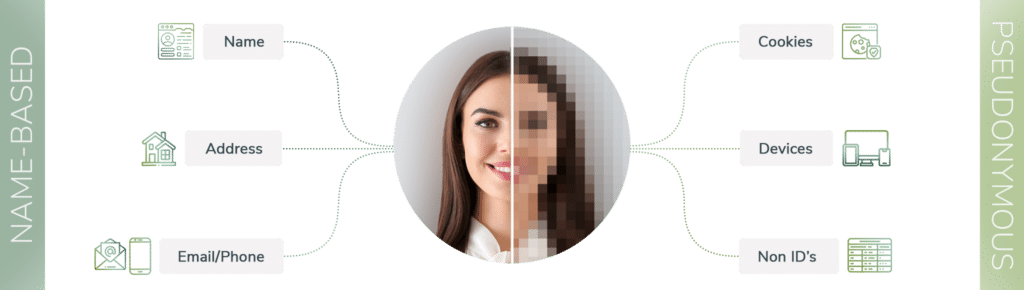
It’s the difference between identifying a person—and approximating one. And when those guesses get counted as matches, the metric becomes meaningless.

What Happens When the Logic Gets Looser
When probabilistic matching gets mixed into a match rate without distinction, everything downstream gets distorted:
- Personalization reaches the wrong people
- Attribution assigns credit inaccurately
- Campaigns appear to perform better than they truly are
- Budgets get wasted on impressions that never should’ve been served
It’s the illusion of accuracy, not the reality.
And it explains why some campaigns look strong in reporting but weak in actual business impact.
Why Smarter > Bigger
A higher match rate doesn’t matter if it’s built on guesswork. What matters is what type of match is driving the number.
Transparency should be the standard:
- What percentage of matches were deterministic?
- What percentage were probabilistic?
- What logic created each category?
- What confidence level supports them?
When brands have control over match thresholds(and visibility into how they’re applied) marketing becomes more accountable, measurable, and aligned to real outcomes.
Smart matching isn’t about identifying everyone.
It’s about identifying the right people accurately.
Precision Builds Trust
Marketers don’t need bloated match rates; they need clarity.
They need to know when accuracy is paramount, like loyalty segmentation or CRM enrichment, and when scale is acceptable, such as in broad awareness campaigns.
The power is in the ability to tune logic by use case. One-size-fits-all matching is what creates waste. Configurable, transparent matching is what drives performance.
Where We Stand
At Audience Acuity, we believe match rates should reflect truth, not marketing polish.
That’s why we provide record-level transparency, distinguishing:
- Deterministic vs. probabilistic
- Tight vs. loose logic
- Individual vs. household-level matches
It’s not about inflating a number.
It’s about empowering brands to choose the right match logic for the right moment, and to trust the outcomes that follow.
When you stop chasing “bigger” and start demanding “smarter,” match rates become what they were supposed to be: a measure of accuracy, not illusion.
 The Truth About Data Volume: Why More Isn’t Better